… it took over 100 years for the women of Lincoln to broadly embrace the right to vote?
“Shall not be denied or abridged ... on account of sex”
The Women of Lincoln and the 19th Amendment
It took 50 years for the woman suffrage movement to gain the right to vote in 1920. Why did it take until 1980 before women took full advantage of their newly-won right and voted at the same rate as men? Well, consider the history of Lincoln.
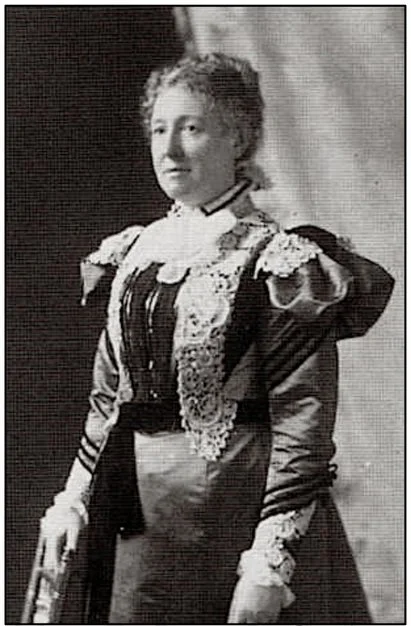
Mary E. Dana DeCordova, one of the first Lincoln women to register to vote in 1884.
In 1879, Massachusetts women were granted the right to vote for their local school committee members. Yet fewer than 5% of women registered to vote, and only 2% cast ballots. In Lincoln, three women registered, but only one went to the polls.
Women argued that the right to vote for male school board members (only men could hold public office) was too trivial for the bother. Yet in 1895, when Massachusetts women were allowed to vote in a referendum on woman suffrage for all local offices, only 7% of eligible women registered and only 4% went to the polls. In Lincoln, five women registered—two Wheelers, two Farrars, one DeCordova—but only three actually voted. Unsurprisingly, the 1895 referendum was overwhelmingly defeated by men.
Pamphlet by the National Association Opposed to Woman Suffrage.“You do not need the vote to clean out your kitchen spout.”
Arguments against suffrage—made by women as well as men—were sometimes frivolous, sometimes preposterous. “You do not need the vote to clean out your kitchen spout.” Any pregnant woman who voted would “expose herself to excitement that will jeopardize the physical and mental well-being of the child that is to be.” The real goal of suffragists was “a complete socialist revolution.”
Undaunted, suffrage supporters tried again in 1913 for a referendum on woman suffrage in which women would be allowed to vote. The 28 Lincoln women who promptly registered in eager anticipation soon fell victim to legislative skullduggery. The Speaker of the House opposed suffrage and swapped in a different proposal—to amend the state constitution outright. The trick was, this halted the referendum, and amending the state constitution required a two-thirds vote in the Massachusetts House to pass. When the House vote came, it was 144 “Yays” against 88 “Nays.” Lincoln’s representatives voted in favor, but to no avail. The tally was eleven votes short of the required two-thirds.
In November 1915, a referendum was again on the ballot, to remove the word “male” from Massachusetts’ qualifications for voting. This time, only men could vote. The Massachusetts Woman Suffrage Association in mid-October had staged a pro-suffrage parade in downtown Boston, with 15,000 marchers and 30 bands, urging a “Yes” vote.
A parade of 15,000. Yet according to a pamphlet by the Massachusetts Anti-Suffrage Committee, only a noisy minority of women actually wanted the vote: "Socialist women, Feminist women, heckling, militant women, ... women who invade prize rings, blacklist Congressmen, and abuse opponents.”
The Age of Brass/Or the Triumph’s of Woman’s Rights, lithograph (New York: Currier and Ives, 1869). This Currier and Ives print highlights the fears most people had about women’s rights. Courtesy of the Library of Virginia, Richmond
Seventeen states had by then already given women the vote. The Massachusetts Anti-Suffrage Committee claimed the result in such states was that “it has increased taxes, lessened respect for the law, menaced the home, and injured women.” No less was at stake in 1915, they warned, than the survival of the Republic: “Woman suffrage is demanded by Socialists and Feminists as a means to an end—the end being a complete socialist revolution.”
What men should do, the Anti-Suffrage Committee urged, was deliver “not merely a defeat for woman suffrage, but a defeat so overwhelming that the question will not rise again at least in this generation.” And the men of Lincoln in 1915 took the advice: 66 voted in favor of woman suffrage and 143 (68%) voted against—an even larger rejection than the overall “No” vote in Massachusetts.
At last, on August 18, 1920, the 19th Amendment to the U.S. Constitution was ratified, and the women of Lincoln flocked to the town clerk’s office to register. When ballots were tallied that November, 189 Lincoln women had gone to the polls for their first vote in a Presidential election.
Who were these pioneering Lincoln women? We might guess they would be younger, single women with careers, or perhaps married to professional men who were more liberal in their ideas. We might guess they would be upper crust. Brahmin suffragists in Massachusetts were often accused of wanting the vote for themselves, with little interest in mobilizing working-class or immigrant women to participate in elections.
In fact, the women voters of Lincoln were not so young. Their median age was 45. Only a third were single, and only a dozen had jobs outside the home. A few of these women came from households of lawyers, doctors, brokers, and a minister, but most were wives or daughters of farmers, carpenters, and chauffeurs. If home ownership identified Lincoln’s better-off sorts, 70% of these pioneering women did live in homes that were owned, not rented. But that was no different from Lincoln women generally.
In sum, the Lincoln women who grasped the opportunity to vote in 1920 were not so distinct from their non-voting sisters.
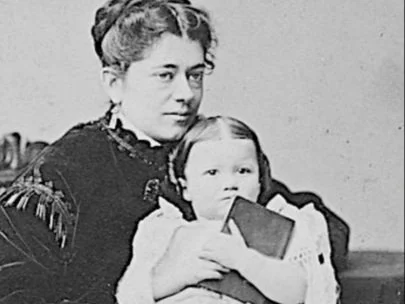
Sarah and Alice Codman in 1870. Sarah was 78 when she and her daughters Alice and Dorothy registered to vote in August 1920.
And yet, even though women out-numbered men as eligible voters in Lincoln in 1920, turnout among women was 20% lower than for men. Of the 280 women in Lincoln eligible to vote, 91 had spurned their hard-won suffrage.
We should not discount the obstacles women faced. Massachusetts had both a literacy test and a $2 poll tax for voting. The $2 tax might seem no great burden, yet as a portion of average wages for a working woman in 1920, it was equal to a $200 tax today—to be paid each year, just to vote. Such obstacles vanished with the 24th Amendment to the U.S. Constitution in 1964, however. So they cannot explain why voting participation by women nationally did not equal that of men until the presidential election of 1980.
Each time a new group has gained the franchise—be it women or 18-year-olds—it has taken time for the civic habit of voting to develop. Although some anti-suffrage arguments were silly and insulting, others were powerful cultural appeals about a woman’s proper role as wife and mother—often made by women to other women.
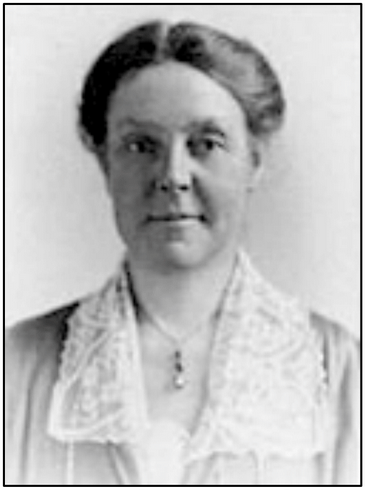
Helen Storrow (1864-1944)
Lincoln’s Helen Storrow, for example, supported the Saturday Evening Girls Club in Boston’s North End, where girls and young women gathered to discuss history, politics, civics, and economics. Storrow also ran Girl Scout leadership programs at her home in Lincoln. Yet she opposed women’s suffrage, reportedly because her husband opposed it.
The pioneering women of Lincoln nevertheless did herald a new era in politics that has endured. We cannot know for sure how they voted in 1920, because their ballots were secret. But we can infer from prior voting patterns of Lincoln’s men that a gender split occurred in that very first election. Women didn’t all vote like their fathers or their husbands. They favored different candidates. Ever after, “courting the women’s vote” would become a key factor in politics, in Lincoln just as in the rest of America.
The spirit of those pioneering women is not just history. It lives on among today’s Lincoln residents who are their descendants. One hundred years of progress—and more to come.

Charlotte H. Donaldson

Sarah Donaldson Andrysiak

Kate W.Donaldson
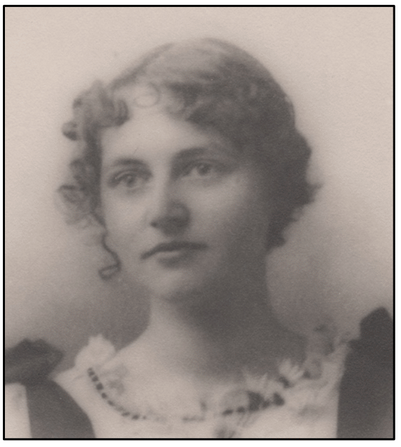
Pauline Eveleth Todd

Lucia Todd MacMahon
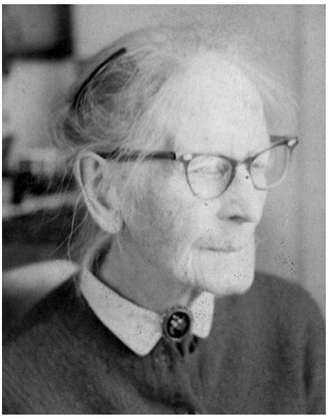
Edith F. Flint

Susanna Flint

Abigail Flint

Sarah and Nina Flint
The Lincoln Historical Society is grateful to the following for their help with this article: Jack MacLean, Robb Todd, and Lisa Welter. Photographs were provided by the Donaldson, Flint, and Todd families.
The Lincoln Historical Society