… That Lincoln Has a Long History of Welcoming Refugees?
Lincoln’s history of welcoming refugees extends from the French and Indian War to the torments of our own times.
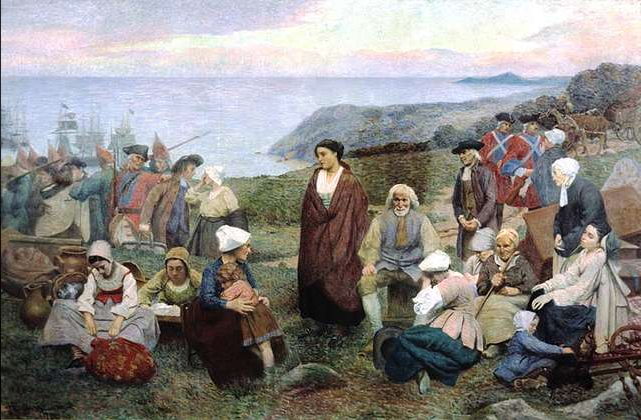
The Deportation of the Acadians, by Henri Beau
After Great Britain acquired Canada following its victory in the French and Indian War (with considerable help from Massachusetts soldiers), Britain decided the French population of Atlantic Canada posed a security threat to British rule. Beginning in 1755, those French Acadians who refused to sign an oath of allegiance to Britain were rounded up and deported to elsewhere in the British empire.
Judge Chambers Russell of Lincoln had a role in settling some of these refugees in Massachusetts. Lincoln took in Joseph Hibbard, with his wife Nanney and their two daughters. Joseph and Nanney Hibbard were still in their twenties, and for a time, they were placed in various households, where Joseph provided farm labor and Nanney did household chores. In 1759, the town converted an old one-room schoolhouse in south Lincoln to serve as the Hibbards’ home. From time to time, the town also provided the family with firewood and provisions. The fate of the Hibbards is unknown. Many of the displaced Acadians found their way to Louisiana where they formed the Cajun community there. But at least one of the Hibbards stayed in Lincoln. In 1762, the town paid Timothy Wesson five shillings “for making a coffin and digging a grave for the French family.”
Two hundred years later, another family displaced by war found its way to Lincoln.
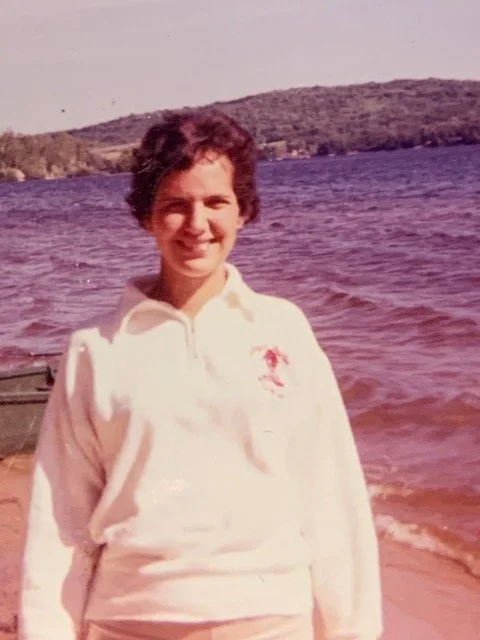
Adele Peterdi Harvey
Adele Peterdi Harvey was eleven years old when Soviet tanks rolled through the streets of her village, to crush the Hungarian Uprising against Soviet rule in 1956. Her father, John Peterdi, had been a reconnaissance pilot for the Hungarian Air Force during World War II and spent the last few months of that war as a POW on the Russian Front. After the war, he held various jobs in Budapest ranging from commercial pilot to delivering groceries on a motorbike…whatever it took to feed his family.
Tanks in Budapest, 1956
When the Soviet army invaded, Adele’s parents decided the family should flee. Her father contacted his brother for aid in getting the family over the border into Austria. The brother knew farmers living in the border area, and the farmers knew the safest places to cross, unseen by guards.
A day or so later the family boarded a train headed west. They were instructed to exit the train at a stop near the Austrian border,to run to the nearest building, and then wait for the guides who would arrive after dark. At nightfall, local people took them through ploughed fields toward the Austrian border. There they were met by a car driven by two young American men who had come to that spot specifically to assist Hungarians fleeing into Austria. The family was then flown to Camp Kilmer in New Jersey where “Operation Safe Haven” welcomed thousands of Hungarian refugees.
Thus began Adele’s life in America. In time, Adele got a college degree in English Literature, and in 1978, she moved to Lincoln with her husband and two sons, joined some years later by Adele’s father.
Lincoln’s welcome to refugees continues. For more than twenty years, beginning in 1983, as civil war ravaged the African country of Sudan, some twenty thousand boys — children, really —trekked as much as a thousand miles to refugee camps in Ethiopia and Kenya, to avoid forcible service as child soldiers. There these Lost Boys and Girls languished for years along with other refugee families, who brought with them daughters as well as sons.
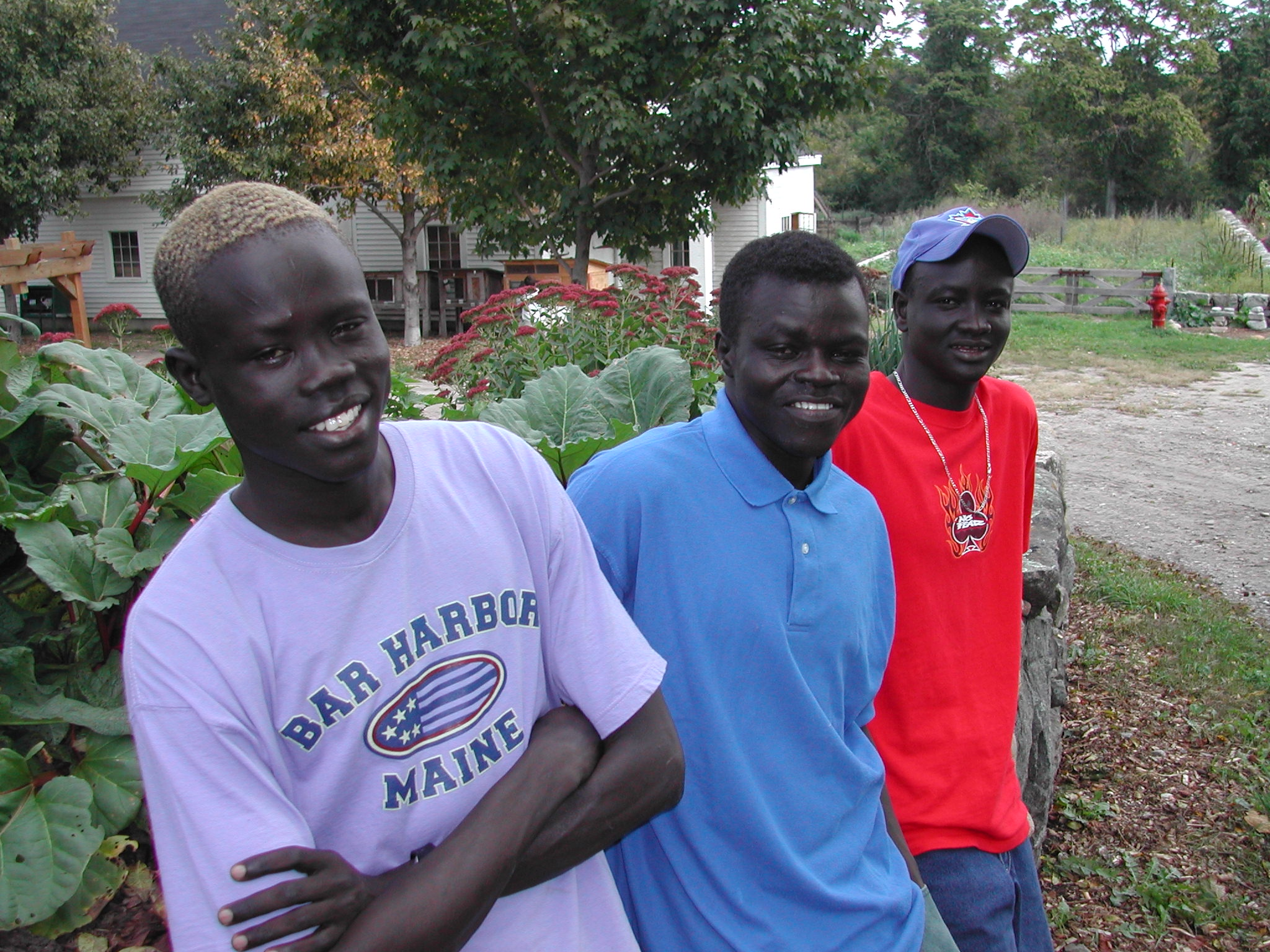
Finally, in 2001, the United States began admitting some of these children and teens for resettlement, and a small group were taken in by families of Lincoln. Some Lost Boys and Girls found comforting memories of home while tending the animals and fields at Codman Community Farms. All attended Lincoln‑Sudbury Regional High School, where their skill on the soccer field helped carry the school to state championships.
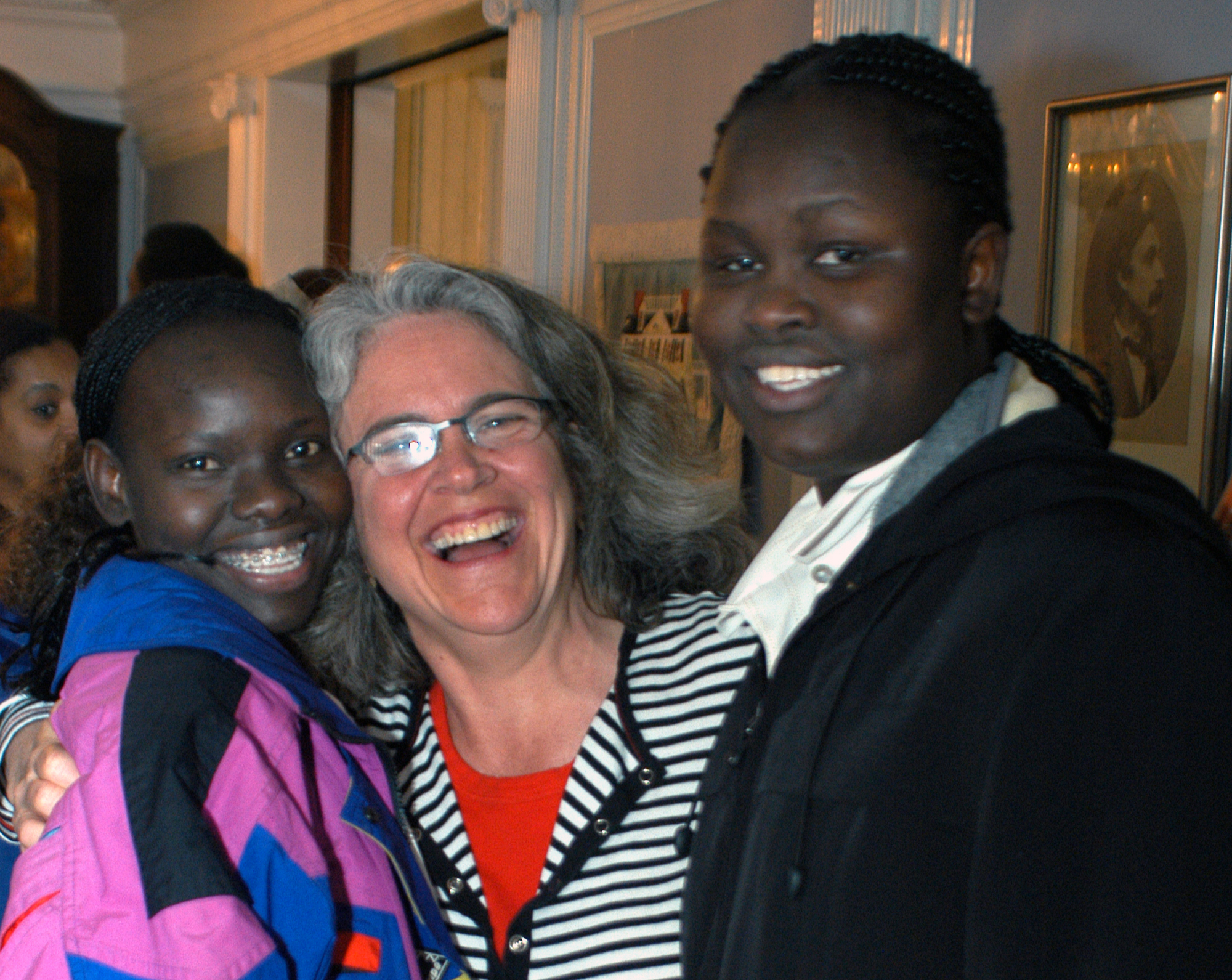
Around these young people grew a community effort that became South Sudanese Enrichment for Families—an organization devoted to helping these refugees and their families build a durable future in America. Many Lincoln residents have volunteered over the years to support enrichment activities to give these newcomers to Greater Boston, including Lincoln, a strong start in their new homeland. The work continues today, as they have grown into adults with families of their own, by providing financial literacy workshops, scholarships to send their children to preschool, camp and summer enrichment programs for their children, and mentoring—among other services. In a transition that honors the resilience, hard work, and capacities of South Sudanese Refugees to America, Susan Winship of Lincoln will soon pass leadership of South Sudanese Enrichment for Families to one of these Lost Boys, now a grown man, Panther Alier, who will continue to support local South Sudanese refugees through the mission of SSEF and with the perspective of one who has walked a similar path himself.
War is cruel. Yet over the centuries, Lincoln has never ceased being a welcoming home for refugees fleeing war’s cruelty.
This article is deeply indebted to Jack MacLean, Gus Browne, and Carolyn Montie for the stories of these refugees.
Donald L. Hafner
The Lincoln Historical Society
March 2026
For more on The Lost Boys & Girls of Sudan, attend this short documentary produced by
Molly Robinson Bedell, formerly of Lincoln:
Between Two Worlds
Wednesday, March 18th, at 7 PM
at the Regent Theater in Arlington
For info & advance tickets, click here.
To stay “in the know” subscribe & keep informed!
Do you like what you’re reading?
LHS receives no town funding & relies completely on charitable giving.
Consider becoming a Member , Donating , or Volunteering to sustain our work.
Thank you!